
Serving Older Adults in the Western Chicago Suburbs: An Interview with Taylor Stazzone, MOT, OTR/L

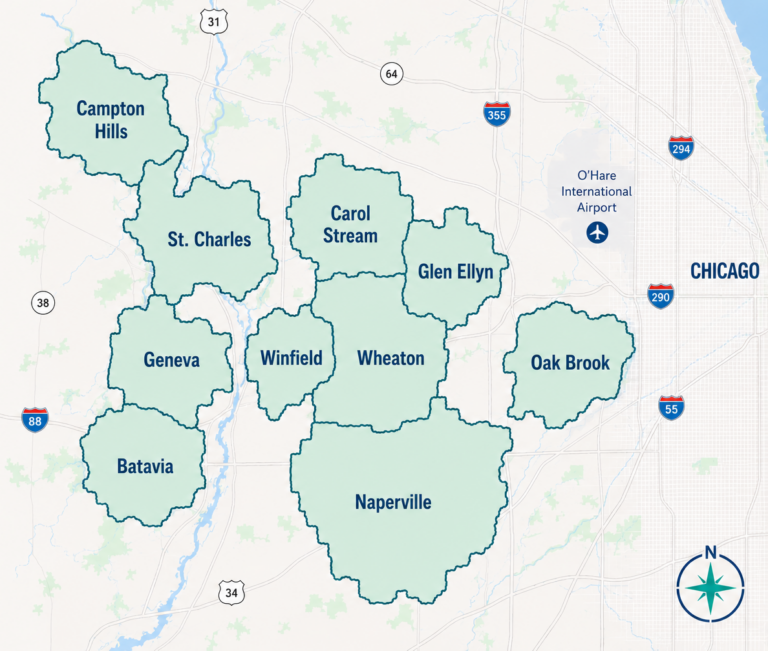
We are thrilled to share that earlier this month, we expanded our care management team to include Taylor Stazzone, MOT, OTR/L, an experienced occupational therapist and care manager from Geneva, Illinois. Taylor’s appointment to ACE brings with it the opening of our Western suburbs market. in addition to serving Seniors in the city of Chicago and the North Shore, we are now able to provide care management for older adults in Batavia, Carol Stream, Campton Hills, Geneva, Glen Ellyn, Naperville, Oakbrook, St. Charles, Wheaton, Winfield, and the surrounding communities. Read on to learn a little bit more about Taylor.
Taylor, we’re very excited to have you on board with ACE. Tell us a little about your background and what led you to become a geriatric care manager.
I earned my bachelor’s degree in psychology before going on to complete my master’s degree in occupational therapy. From the beginning, I knew I wanted a profession that would allow me to build meaningful relationships and help people navigate life’s challenges. What drew me to occupational therapy was its focus on helping people participate in the activities that matter most to them. Rather than simply doing things for someone, occupational therapists work alongside their clients to help them maintain independence, dignity, and quality of life.
Over the past several years, I have worked primarily with older adults in a variety of settings, including assisted living and memory care communities. Through those experiences, I discovered that geriatrics is where my heart truly is. I love being able to build lasting relationships while helping older adults and their families navigate the challenges that can arise as parents age. As an occupational therapist, some of my favorite conversations have been with family members who were trying to figure out what came next. Those conversations helped me realize that I love helping families navigate difficult decisions just as much as I love providing therapy.
As much as I value my OT background, I found myself becoming increasingly passionate about advocacy, care coordination, and helping families navigate the challenges that come with aging. Geriatric care management allows me to combine my clinical knowledge with the parts of healthcare I enjoy most: listening, problem-solving, educating families, and connecting people with the resources and support they need. It gives me the opportunity to understand each client’s unique situation and help create a plan that supports their goals, priorities, and quality of life.
You have such a thoughtful background in working with older adults. What does your approach to care management look like?
I enjoy serving as a guide, advocate, and resource for older adults and their families. Aging often comes with complex decisions related to healthcare, living arrangements, safety concerns, cognitive changes, and caregiving needs, particularly for families supporting an aging parent. My role is to help clients and families navigate those challenges and feel supported throughout the process.
This might involve attending appointments, helping families understand medical recommendations, coordinating services, or connecting clients with community resources. Every client and family is different, so my approach is always tailored to their unique needs, goals, and circumstances.
Most importantly, I serve as an advocate. Families are often balancing careers, caregiving responsibilities, and concerns about their aging parents’ well-being. Having someone who can help coordinate care, provide guidance, and offer an outside perspective can make the process feel far less overwhelming.
How does your background as an occupational therapist benefit your clients?
My background as an OT helps me understand not just a person’s medical conditions, but also how they affect their everyday life. Occupational therapists are trained to look beyond diagnoses and understand how health challenges impact a person’s daily routines, independence, and overall quality of life.
Because of this training, I am able to identify potential concerns before they become larger problems. Whether it’s recognizing fall risks, evaluating home safety, identifying changes in cognition, or recommending appropriate levels of support, I approach each situation through a practical and functional lens.
Much of my professional experience has been in assisted living and memory care settings, which helps me guide families as they make decisions for aging parents about aging in place, caregiving services, and senior living options. My goal is always to help clients remain as safe, independent, and engaged as possible while supporting families through the decision-making process.
What would you like clients to know about you?
I want clients and families to know that I genuinely love working with older adults. Some people find their calling early in life, and I feel fortunate to have found mine. There is something incredibly rewarding about building relationships with seniors, hearing their stories, learning from their experiences, and helping them continue doing the things that matter the most to them.
I believe that every person deserves to feel heard, respected, and included in decisions about their own care. I take the time to listen carefully, understand each individual’s goals and concerns, and develop solutions that reflect what is most important to them.
Families can also expect honesty, compassion, and reliability. Whether I am helping navigate a difficult transition with an aging parent, coordinating services, or simply providing reassurance during a stressful time, I want clients to know they have someone in their corner who genuinely cares about their well-being.
Taylor, you have a beautiful approach to working with Seniors. What misconceptions about aging do you encounter most often?
One of the biggest misconceptions about aging is that it is only a period of decline. While aging certainly comes with challenges and changes, it can also be a time of meaning, connection, and purpose. Another common misconception is that a person’s value is tied to their physical abilities, independence, or cognitive functioning. In reality, aging does not diminish a person’s worth or importance. Many adult children caring for aging parents are navigating these changes for the first time, and it can be easy to focus on what has been lost rather than recognizing the strengths, preferences, and individuality that remain. Every older adult has a unique story, and they deserve to be treated with the same respect, dignity, and individuality as anyone else.
One of the things I enjoy most about working with older adults is helping them continue doing the things that matter to them. Aging may bring changes, but it does not change what gives a person’s life meaning, purpose, and joy.
Taylor, thank you so much for sharing your approach to working with older adults.
If you are interested in learning more about our services, particularly for Taylor’s service area, please reach out here.